
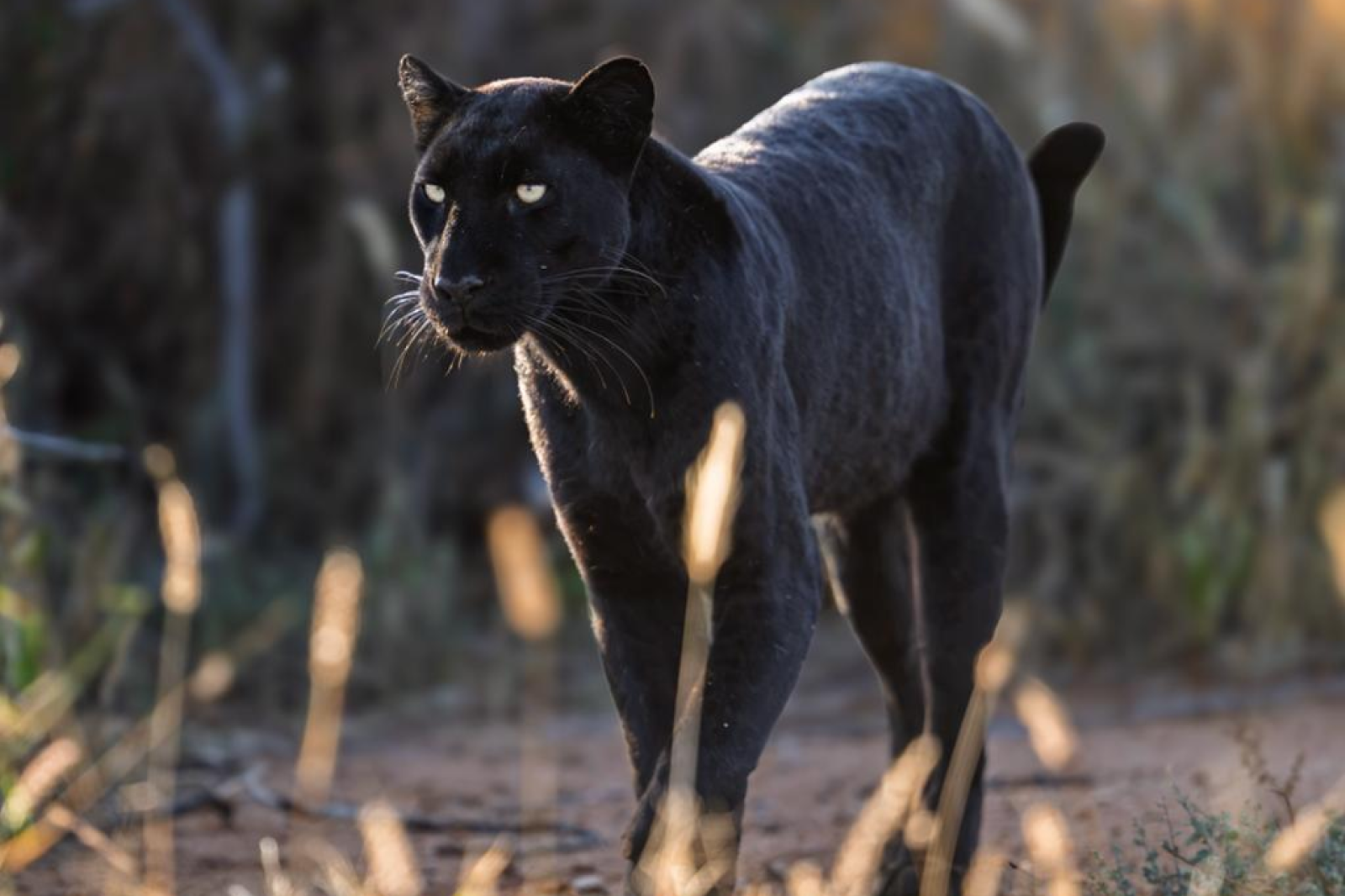
Some journeys begin long before the first flight is booked. For me, this one began years ago, the first time I saw a photograph of a melanistic leopard moving through the golden scrub of northern Kenya — a creature so rare that many photographers spend a lifetime without ever seeing one. Her name is Giza, Swahili for “darkness,” and in June 2026, after ten years of photographing wildlife across continents, I finally set out to find her.
I have been a wildlife photographer for a decade now, based out of Bangalore, India, and my work has taken me to forests, savannahs, and wetlands across the world. But few expeditions have carried the weight of anticipation that this one did. I was leading a six-member photography group to Laikipia, the vast plateau in central Kenya that Giza calls home, and I knew that every one of us was carrying the same quiet hope: that somewhere out there, the shadow would show herself.
The Journey In
We flew from Mumbai to Nairobi with Kenya Airways — a comfortable six-hour journey made easier by a crew that took wonderful care of me and my group. We touched down in Nairobi at 6:30 in the morning, and by 7 AM we had cleared immigration and stepped out into the crisp Kenyan air, where our driver, Moses, was waiting with a smile and a comfortable Toyota Hiace.
The road from Nairobi to Laikipia is a six-to-seven-hour drive, winding north through the highlands via Nanyuki, with Mount Kenya keeping watch on the horizon. The final leg, from Nanyuki into Laikipia, abandons the tarmac entirely — a proper off-road stretch that rattles your bones and sharpens your senses, a fitting overture to the wilderness ahead.
By around 2 PM we rolled into Ewaso Camp, our home for the expedition. There was no time to linger. A quick lunch, camera bags checked and rechecked, and by 2:30 PM we were out on our very first game drive.
Into Giza’s Territory
We travelled in two safari Land Cruisers driven by Leku and Emmanuel, two expert drivers who read the landscape the way the rest of us read a map. Within fifty minutes we had reached the Mpala Conservancy, where we were joined by Isaac, a ranger and guide whose knowledge of Giza’s movements would prove to be the difference between hoping and seeing.
Giza has become a living legend in this landscape. Around seven years old now, she is a rare and almost mythical creature — a black panther still roaming freely beneath sun and stars, a shadow that glides through Laikipia’s thorn scrub and rocky outcrops. Melanistic leopards are extraordinary anywhere in the world; in Africa, they are vanishingly rare. To find one takes equal parts knowledge and instinct — and she is only ever found in her own territory, on her own terms. It is a privilege few ever earn.
Isaac earned it for us in thirty minutes.
The Moment
I will try to describe it, though I already know words will fall short. The vehicles slowed. Isaac raised a hand. And there she was — a patch of darkness deeper than the shadows around her, resolving slowly into muscle, movement, and two amber eyes.
She looked at me. Eye to eye.
Tears were running down my face before I even realised it. Ten years of early mornings, missed sightings, long waits, and long flights — all of it collapsed into that single moment of contact. I was excited, emotional, and utterly still all at once. Meeting Giza in Laikipia was everything I had dreamed of — raw, silent, and completely surreal. Some moments don’t need words, but they demand to be felt.
We spent close to ninety minutes with her that evening. She moved without hurry, indifferent to our presence in the way only apex predators can be, and we followed at a respectful distance, shutters whispering, hearts pounding. The light softened, the plateau turned to gold and then to grey, and still she moved through it all like a piece of the coming night that had arrived early.
Game drives in the conservancy end by 6:30 PM, and saying goodbye to her that first evening was hard. We watched her melt back into the bush — darkness returning to darkness — and turned our vehicles toward camp.
Nightfall at Ewaso
The hour-long drive back was quiet, each of us processing what we had just witnessed. Back at Ewaso Camp, a hot shower washed away the dust of the wild, and over an early dinner the group finally found words again — half sentences, mostly, and a lot of disbelieving laughter. By 9 PM we called it a day. The next morning’s full-day game drive would begin at 5 AM, and Giza’s territory was waiting.
As I lay in my tent that night, listening to the sounds of the Laikipia bush, I kept returning to that first moment of eye contact — and to what the darkness before dawn might bring.
Day Two: Before the Sun
The second day began in a darkness of our own. We were up by 4:30 AM, and by 5 we were in the Land Cruisers, headlights carving through the cold morning air. We had decided to make it a full-day game drive, so packed breakfast and lunch travelled with us. The sun was just beginning to rise as we rolled into the Mpala Conservancy at around 5:45 AM, where Isaac joined us once again — and the search for Giza resumed.
But this time, we were hoping for something more. Over the past six to nine months, Giza had been seen with her first litter — two cubs, both wearing the classic golden, spotted coat of a normal leopard rather than their mother’s midnight black. Mother and sub-adults had been sighted together and separately across the conservancy, and as a photographer, I nursed a quiet, almost greedy dream: Giza and her cubs, together, in one frame.
Zawadi, the Gift
We were scanning the bushes when a flicker of movement stopped us. A leopard — golden, spotted, unmistakable. Isaac recognised her in seconds: Zawadi, Giza’s female cub, around eighteen months old and on the verge of separating from her mother to claim a territory of her own. Her name means “gift” in Swahili, and she is exactly that — a strikingly beautiful young leopard with the classic rosetted coat her mother never wore.
We spent close to thirty minutes with her, cameras working steadily, capturing photographs and video of this poised young cat before she melted back into the bushes. The gift had been brief, but it was real.
Giza in Full Light
The sun climbed higher and its rays grew intense as we swept the Mpala landscape for the mother — and then, at last, she appeared. We caught her mid-hunt, stalking a dik-dik, the tiny antelope so common across Laikipia. The little creature escaped her powerful claws, and Giza, unbothered, walked out of the shadows — true to her name — and stepped into the middle of the road.
And what a pose she gave. Out in the open, in full morning light, the black panther of Laikipia stood on the road as if she owned it — because she does. I was able to capture some of the finest images and videos of my career in those minutes. Then she began calling out for her cubs, and our hearts leapt: Zawadi was somewhere close by, and for a moment we dared to imagine mother and cub reunited in front of our lenses. But the bushes stayed still. No cubs came. Giza slipped into the thick thorny scrub in search of them, and we bid her goodbye for the morning.
Breakfast on the Ewaso Ng’iro
We drove to the shores of the Ewaso Ng’iro, the river that rises on Mount Kenya and threads life through this semi-arid land, and unpacked our breakfast. As we ate, the group passed cameras around, reviewing the morning’s images of Zawadi and Giza — and there was no hiding the delight. Frame after frame of a black leopard in golden light, and her golden daughter in the shade.
It was somewhere over that riverside breakfast that we all admitted we were falling in love with Laikipia. Unlike in the busier parks, there are far fewer safari vehicles and far fewer people here — often it was just us, the land, and whatever chose to show itself.
The Land and Its Riches
As the day grew hotter, we set out to explore other corners of the conservancy. Laikipia’s wilderness is a mosaic of semi-arid savanna, wooded grassland, and riverine woodland, and it shelters an astonishing wealth of life. African elephants, hippos, lions, leopards, cheetahs, and African wild dogs roam these plains. It is also a stronghold for some of Africa’s most endangered and special species — reticulated giraffes, Grévy’s zebras, and of course the elusive black leopard herself. Olive baboons, vervet monkeys, and the tiny Kenya lesser galago, or bushbaby, fill the trees, while hundreds of bird species — hornbills, raptors, and waterbirds among them — fill the skies.
Shy Neighbours and First Sightings
On the way, we came across two lionesses with cubs. But here is the thing about Laikipia: with so few safari vehicles around, the animals are far shyer than their celebrity cousins in the Masai Mara. The moment they saw us, the lionesses began moving their cubs away — no lounging for the cameras here. It is wilder, in the truest sense of the word.
That morning also brought two personal firsts. I photographed reticulated giraffes and Grévy’s zebras for the first time in my life — and they looked remarkably different from the giraffes and zebras we were all used to seeing in the Masai Mara. The reticulated giraffe wears a crisp geometric web of white lines over rich chestnut patches, and the Grévy’s zebra, the largest of all wild equids, carries narrow, elegant pinstripes and great rounded ears. Ticking two such species off in a single morning felt like Laikipia showing off.
The Long, Hot Afternoon
As the sun climbed to its fiercest, we pulled into the shade of some trees for our packed lunch, and then did the most sensible thing anyone can do in the equatorial midday heat — nothing. The whole group took a power nap right there in the Land Cruisers until 3 PM, when we set off again for the area where Giza was seen regularly.
The forest felt empty — no predator movement anywhere, only dik-diks roaming freely, which is usually a sign the hunters are sleeping. Two other Land Cruisers were out searching for Giza as well, and then Isaac’s wireless crackled with a message. We drove fast.
And there she was — waking from her sleep, yawning that enormous, unhurried cat yawn, gathering herself to make a move. We captured a few more frames of her in the softening light, one last gift from the queen of darkness, before turning back toward camp as the long, tiring, wonderful day drew to a close.
Campfire Songs at Ewaso
The group drove back happy and spent, and the camp gave us a warm welcome. Quick showers all around, and then we gathered to review the day — and what a productive day it had been: a black leopard, her golden cub, lionesses with young, two first-time species, and a sunset yawn to finish. By the campfire, Leku, one of our drivers, began singing African bush songs as we ate a tasty dinner under the stars. Slowly, reluctantly, we called it a day. The beds were calling, and so was the alarm — 4:30 AM again, for one more full day in Giza’s kingdom.
Day Three: The Land of Shadows
Day three began like the one before — up by 4:30 AM, in the Land Cruisers by 5, packed breakfast and lunch aboard for another full day. The early morning was properly cold, and we tucked ourselves into layer after layer as we set off once more into the land of shadows.
And here is something few people know: Giza is not the only shadow gliding through Laikipia. Spread across the county’s roughly 9,500 square kilometres, other black leopards are believed to roam — a melanistic male, a black female with a black cub, and another black female with two black cubs. Photographic evidence of these ghosts is vanishingly scarce, which is exactly what makes this landscape worth exploring: somewhere out in that thorn scrub, an entire dynasty of darkness moves unseen beneath sun and stars.
Nyota, the Star
Back in Mpala, we resumed our search for the queen and her sub-adults — and instead bumped straight into Nyota, Giza’s young male cub, whose name means “star” in Swahili. Bold and handsome, he is said to take after his father, Kovu. Every photographer in Laikipia dreams of the rarest frame of all — Nyota, Giza, and Zawadi together — and my group had quietly nursed that same dream. It was not to be, but the star made up for it on his own terms, generously offering us some wonderful photo opportunities before vanishing into the bushes.
The Queen Crosses the River
Moments after Nyota disappeared, the wireless crackled again: Giza had been seen beside the Ewaso Ng’iro, attempting to cross toward the Suyian Conservancy. We rushed to the riverbed — and there she was, the queen herself, and this sighting turned out to be the most special of the entire expedition, because we witnessed her behaviour in the wild, unscripted.
Dik-diks, her favourite prey, are everywhere in the park, and we watched her stalk one — low, patient, every muscle coiled — and then the hunt failed, the little antelope bolting free once again. She looked back at us, and I swear there was agony in that gaze. Then she turned, walked to the water, and we watched the black leopard of Laikipia cross the Ewaso Ng’iro and dissolve into the Suyian Conservancy on the far bank.
Giza’s territory stretches across the Mpala Conservancy, the Laikipia Wilderness Conservancy, and the Suyian Conservancy, and she moves freely between them. We had no access to Suyian, and watching her vanish into a land where we could not follow was a quiet heartbreak — softened only by the hope that she would cross back toward Mpala that night.
Grasslands at Dusk
With the queen gone and the star vanished, we spent the rest of the day exploring other corners of Laikipia. The open grasslands offered their own rewards — elephants moving in slow grey processions and Cape buffaloes watching us with their permanent scowl. By around 5 PM we called it a day and headed back to camp for some well-earned rest, winding down as the plateau cooled around us.
The Last Morning
Our final day in Laikipia called for an early start — we planned to wind up the game drive by 9:30 AM. When I woke, my phone was full of messages: four of my participants had decided to skip the morning drive, worn out by three glorious, exhausting days. One brave soul said, “Let’s go” — and so we went. In all my years of photography, I have never skipped a game drive in any jungle. The wild does not reward those who sleep in, and this morning would prove it emphatically.
We were at the Mpala Conservancy by 5:20 AM, before sunrise, and picked up Isaac — who greeted us with the best possible news. Giza had crossed back overnight, from Suyian into the Laikipia Wilderness Conservancy, and could enter our area at any time. We positioned our Land Cruiser near the border of the two conservancies, and the waiting game began. An hour later, Isaac’s wireless crackled one final time: Giza was moving.
A Mother and Her Daughter
I found her first in my binoculars, walking toward us out of the half-light. Then — wait. There was something else. Another leopard, golden and spotted, walking alongside her. As they drew closer, there was no doubt: it was Zawadi, her daughter, moving side by side with the queen of darkness.
And here I did something I almost never do. I put my cameras away. Some sights are too precious to watch through a viewfinder, and a black leopard walking with her golden daughter through the dawn toward Mpala is one of them. I stood there watching with my own eyes, tears of joy running freely, feeling impossibly blessed by whatever luck had brought me to this exact place at this exact hour. It was the most beautiful sighting of the entire trip.
The Kill
As the pair crossed toward Mpala, we tracked them until they disappeared into the bushes — and then came the sounds. The unmistakable sounds of a kill. Moments later, Zawadi emerged with a dik-dik in her jaws, Giza following behind. They carried the kill to a nearby patch of ground, where Zawadi began to feed while her mother watched from a distance — still teaching, still watching over, even on the edge of their separation.
So there I stood: on one side, Zawadi with her kill; on the other, Giza, the ghost of Laikipia, keeping her quiet vigil. What more could a wildlife photographer possibly ask for? We captured some wonderful videos and photographs of them both before they finally melted into the thickets, together.
Farewell, Laikipia
The expedition was a bumper success by any measure — we had seen Giza on every single game drive, a run of luck that left even Isaac and our guides shaking their heads and thanking the Almighty. This was my first trip to Laikipia, and I fell completely in love with the place and its people: the emptiness of its roads, the wildness of its animals, the warmth of its camps. Another trip to this magical destination is already taking shape in my mind.
In ten years of wildlife photography, I have learned that the rarest thing you can capture is not an animal — it is a feeling. Over four extraordinary days in Laikipia, Giza and her children gave us both.
See you again, Giza, Zawadi, and Nyota — godspeed for your lives in the wilderness.